Seedance Community
AI Wall Repair Putty Ad: Knead, Rub, Reveal
How this video was made
- Model
- Seedance High
- Mode
- Image-to-video
Prompt
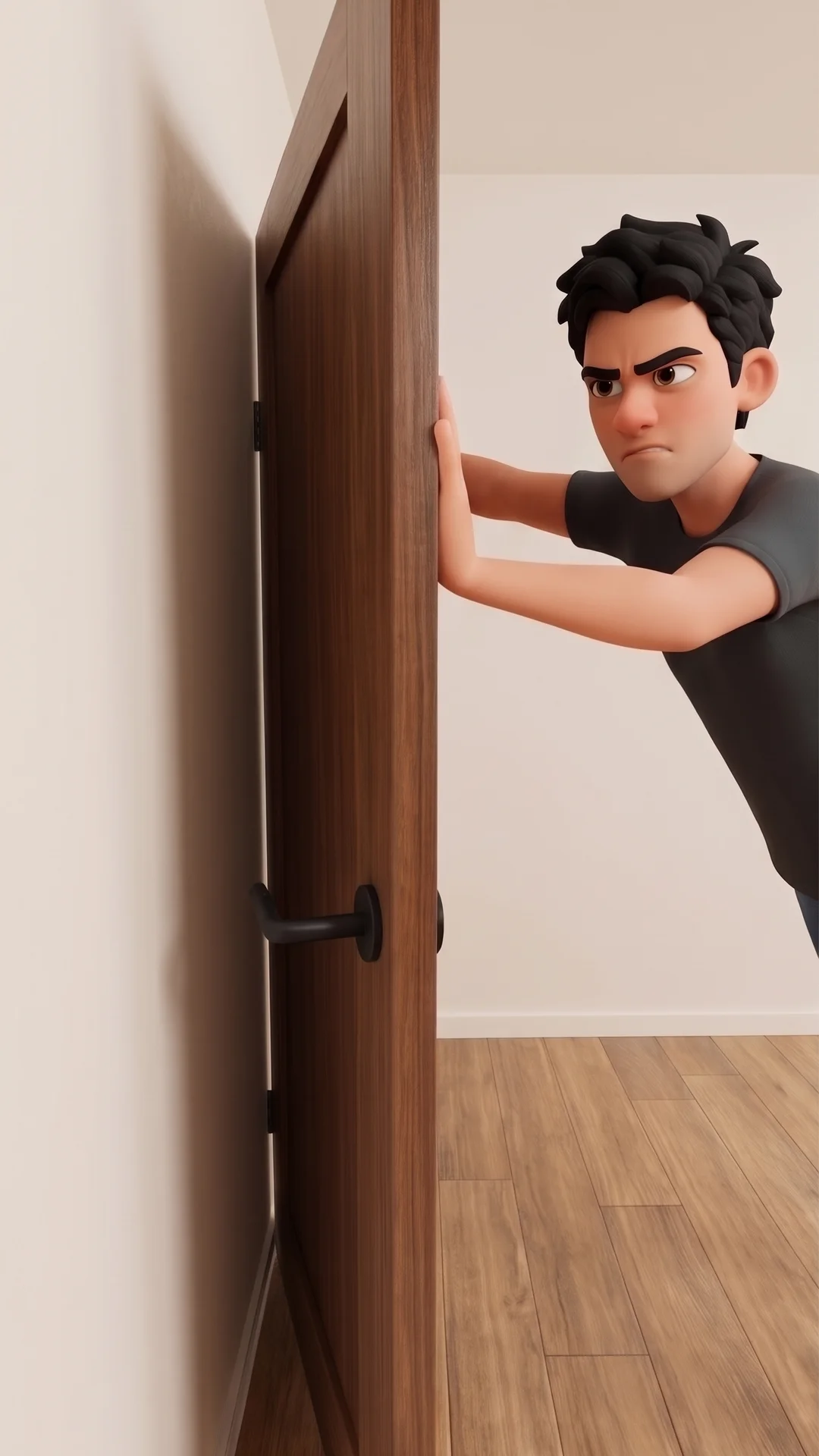
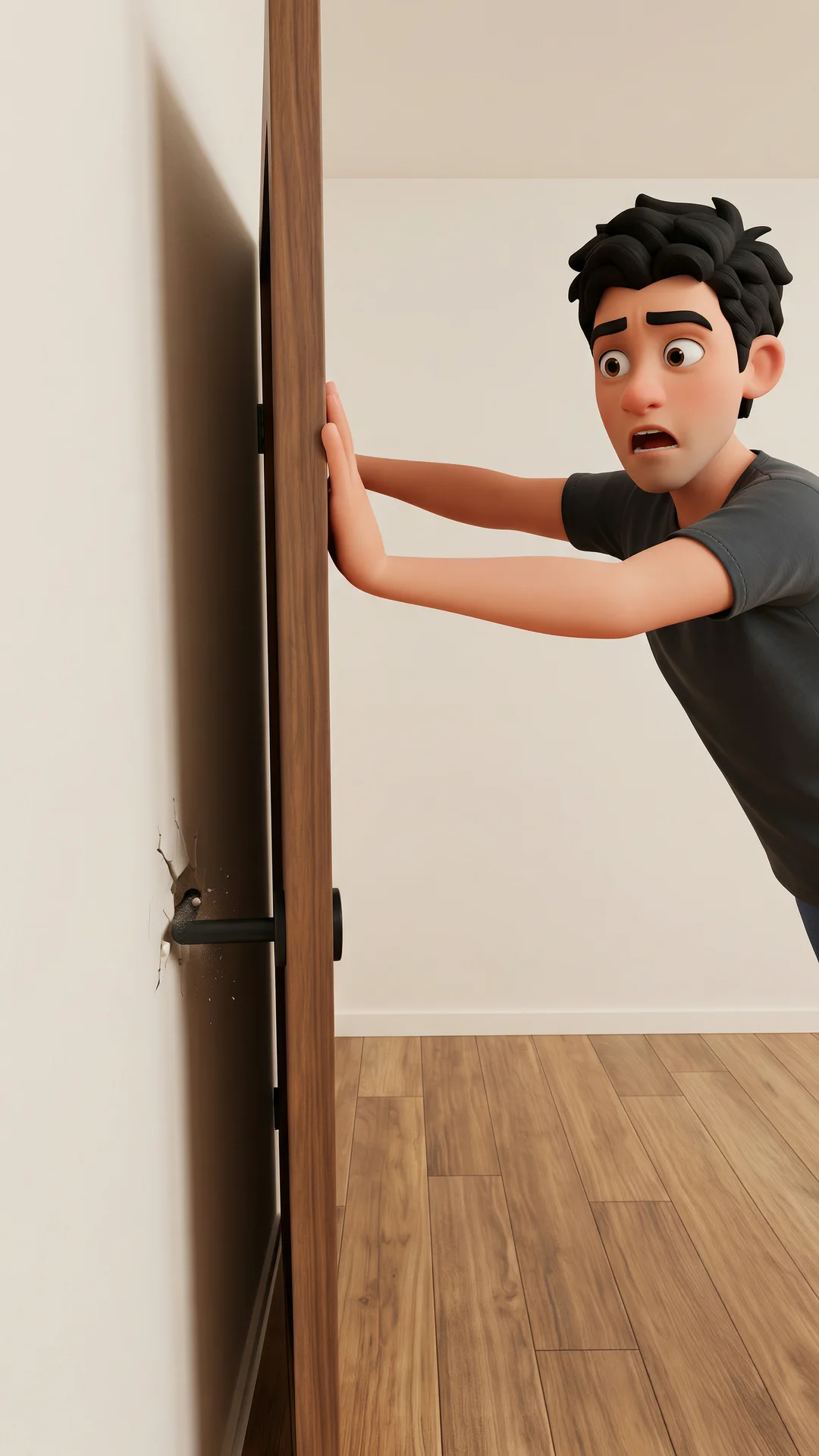
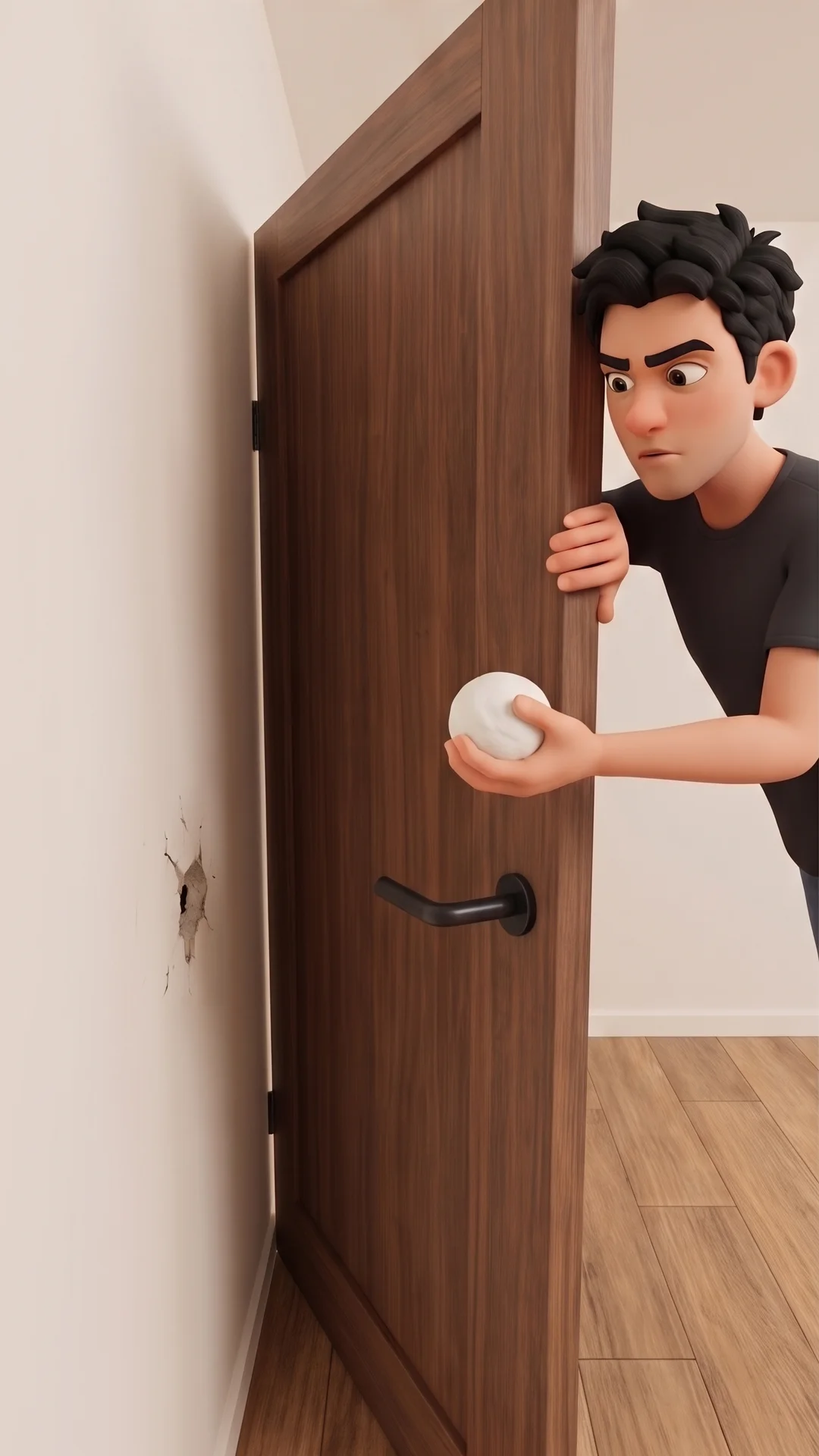
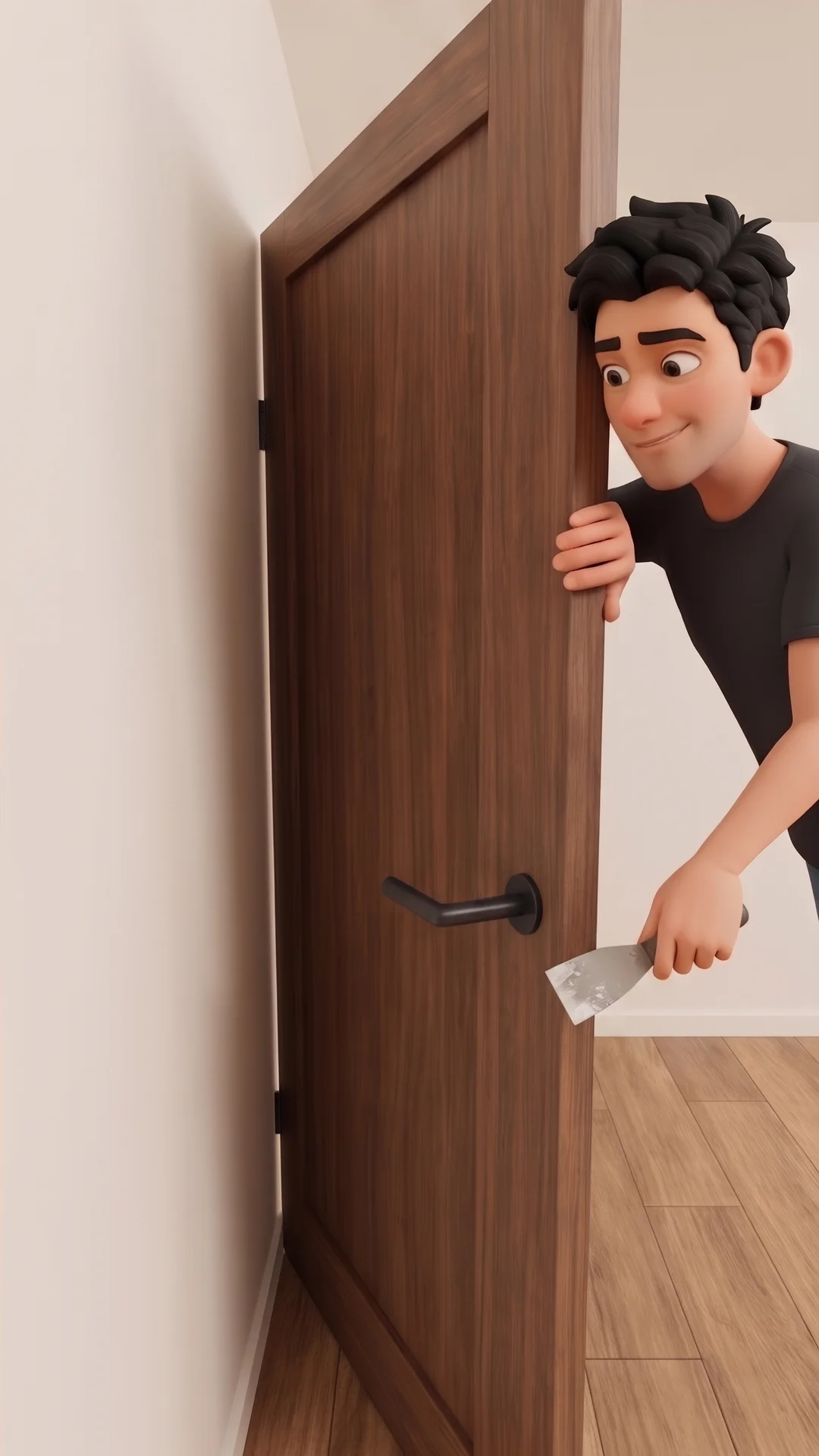
REMAKE SUMMARY (abridged for this field, not the verbatim production prompt). Full video prompts and settings are in the post's Public generation parameters section. The finished film is a three-clip edit, not a single generation. The four reference images are ordered: intact wall, impact, putty, restored wall. Use pairs 1-2, 2-3 and 3-4 for the three clips.

Create an original 3D cartoon ad: a black-haired man in a charcoal T-shirt, warm-white wall at left, walnut door at center, one rigid black lever attached to the door. Locked camera, coherent hands and room geometry. Clip 1 (5s): the man pushes the door toward the wall; the attached lever tip physically hits it, making a compact chipped dent and short cracks. He freezes in shock. Clip 2 (5s): he pulls the door back, exposing the same damaged spot, reaches offscreen and returns holding bulky white soft putty. Clip 3 (9s): release the door, squeeze and knead the putty repeatedly between both hands, press it into the damaged point, then keep the palm in contact for repeated rubbing strokes. Make the putty visibly dent, stretch and spread with each movement. Finish with a small metal scraper, hands clear, seamless wall and relieved smile. No cut, magic sparkle, text, logo, music or speech. Synchronized original squish, rubbing, scrape and exhale sounds.

Seedance High, head-tail-frames, 1080p, 9:16, audio on, watermark off, creativeMode false. Concatenate 5+5+9s at 24fps. Keyframes: imgskit Nano Banana 2.1, 2K, delivered at 1080x1920. Actual rubbing is mostly vertical and final patch clearing remains fast.
Reference images
AI Wall Repair Putty Ad: Knead, Rub, Reveal
One impatient push, a chipped wall, and a handful of white putty. This original 3D cartoon ad follows a small door-handle accident through a tactile repair and a clean-wall reveal.
The accident and the repair
The wooden door rotates toward the wall, carrying its black lever with it. Contact chips the plaster, small pieces fall, and the character freezes in surprise. He pulls the door back, notices the damage and brings a bulky white putty ball into view.
The repair gives the material time on screen. The character works the soft putty between his hands, presses it over the chipped point and rubs the material against the wall. Visible changes in hand direction and putty shape make the application readable before the finishing tool moves across the patch. The repaired wall stays visible at the end.
The rubbing is mainly vertical, and the patch retains a raised oval edge until finishing. The final clearing happens quickly as the knife lifts, so this part remains stylized rather than a fully gradual flattening simulation.
This is an AI-generated fictional cartoon ad. Its simplified repair and seamless finish are part of the animation rather than a measured demonstration of a real product.
Giving an action enough time
The revised repair shot replaces a shorter version whose single application and scrape felt rushed. The added time serves hand motion and material deformation: the useful question is whether the audience can see the work, not only whether the final wall looks clean.
Four original cartoon keyframes establish the intact wall, handle contact, white putty and final finish. Adjoining clips share boundary images. The first two accepted clips are preserved, and the new repair shot uses the same putty and restored-wall endpoints.
Try the structure
Keep the damaged point visible and give the material clear volume. Separate preparation, contact, rubbing and finishing into readable beats. Inspect the generated motion between the endpoints; a clean last frame alone does not establish a convincing repair. Leave an unobstructed final hold so the result can be checked.
Public generation parameters
Video: Seedance High (`seedance-high`), `head-tail-frames`, 1080p, 9:16, creative mode off, generated audio on, watermark off, seed not set. Clip lengths: 5, 5 and 9 seconds. Image pairs: 1-2, 2-3, 3-4 in the attached reference order. Original keyframes: imgskit Nano Banana 2.1, image2image, 2K; delivered as 1080x1920. Original fictional character and geometric blocking; no inspiration-video frames used. Keyframe creation prompts remain in the production archive.
Editing: trim extra endpoint frames, concatenate at 24 fps, 15 ms audio edge fades, H.264 CRF18, AAC 48 kHz. Final: 19 seconds, 1080x1920. The short remake field is an abridged recipe; the three actual video prompts follow verbatim.
Clip 1: shot-1-cause
Use the exact first and last reference frames as endpoints of one continuous five-second shot. Preserve the same clearly fictional 3D cartoon character, charcoal shirt, locked eye-level camera, warm-white plaster wall on screen left, walnut door and its fixed hinges, black door-mounted lever, floor, warm lighting and shadows. The camera never moves; no cuts, zooms, dissolves or scene changes. No photoreal humans. The single rigid black lever stays attached to its round mounting plate on the wooden door and retains its shape and length. No additional handles or hardware appear on the wall. The character remains safely on the room side, screen right of the wooden door. The annoyed man pushes the wood with both palms. During the first two seconds the entire wooden door rotates on its fixed hinges toward the left wall: the visible wooden face narrows and the rigid handle travels LEFT with the wood. The handle must not stretch to bridge the gap. At about 2.2 seconds the lever tip makes a single solid, visibly legible contact with the plaster at the exact point shown in the last frame. Only at this physical contact does a small irregular chipped dent appear with short thin cracks and a few falling plaster crumbs. The small damage remains at that exact wall coordinate. The door stops against the wall, with the lever tip still in the dent. The man immediately freezes in shock, eyes wide and mouth open, palms still on the wooden edge. End on the exact impact reference. Do not repair the wall, move the hole, generate a hole before contact, rebound into a different pose, or introduce putty yet. Synchronized original sound: door movement, one metal-on-plaster thud and small crack, falling crumbs, a short surprised breath. No speech, music, captions, logo or watermark.Clip 2: shot-2-idea
Use the exact first and last reference frames as endpoints of one continuous five-second shot. Preserve the same clearly fictional 3D cartoon character, charcoal shirt, locked eye-level camera, warm-white plaster wall on screen left, walnut door and its fixed hinges, black door-mounted lever, floor, warm lighting and shadows. The camera never moves; no cuts, zooms, dissolves or scene changes. No photoreal humans. The single rigid black lever stays attached to its round mounting plate on the wooden door and retains its shape and length. No additional handles or hardware appear on the wall. The character remains safely on the room side, screen right of the wooden door. Begin with the lever touching the newly damaged wall and the man shocked. He pulls the door edge BACK toward screen right, rotating the whole door away from the wall and widening the visible walnut panel. The handle moves with the wood and clears the wall; its dimensions never change. The compact chipped dent and its short cracks stay fixed at the same wall coordinate throughout. The man stares at the dent, glances briefly offscreen right, reaches one hand out of frame to pick something up, and returns with one bulky pure matte-WHITE SOFT PUTTY ball in his upturned palm. The putty has finger dents, visible thickness and a slightly sagging clay-like shape. His other hand braces the door edge. His expression becomes concerned but thoughtful, an idea dawning. End exactly on the second reference with the damaged spot still fully visible. Do not fill or conceal the damage yet. No floating objects, container or knife appears in this shot. Original synchronized audio: gentle hinge creak, a small inhale, soft putty squish. No speech, music, captions, logo or watermark.Clip 3: repair-rub-v2
One uninterrupted nine-second 3D cartoon shot, with the supplied first and last images as exact endpoints. The main event is tactile, repeated HAND KNEADING AND RUBBING, visibly working soft white putty into the wall, with sufficient time to read the movements. Preserve this original cartoon man, charcoal T-shirt, face and hair, warm-white plaster wall at left, stationary walnut door at center, single rigid attached black lever and warm lighting. Locked camera and unchanged room geometry. The damaged wall point stays at the exact coordinate in the first image. Only the man and soft material move; the door remains at the same wide angle throughout.0.0-1.8 seconds: he releases the door edge with his free hand and brings both hands together around the bulky white putty. Perform TWO distinct squeeze-fold-knead cycles: fingers press deep indentations, the palms compress it into a short thick shape, fold it inward and squeeze again. The putty is pliable clay, visibly deforming with finger pressure, not a rigid ball. His focused eyes follow his hands.
1.8-2.8 seconds: he reaches to the existing damaged spot and firmly pushes the pliable mass directly INTO the chipped recess using his open palm. The material spreads beyond the center with irregular soft edges and finger ridges. It remains visibly three-dimensional and only partly smoothed at this stage.
2.8-6.6 seconds: CONTINUOUS VISIBLE HAND WORK. Keeping his palm and finger pads firmly in contact with the putty, he slowly rubs THREE small overlapping circular motions, then pushes upward, back downward and sideways across the same patch. Clearly show the wrist changing direction and the palm sliding against the wall. The putty compresses, stretches and smears under his hand with each stroke, gradually becoming broader and thinner, filling the cracks. His fingertips press the ragged edges inward and feather them onto the surrounding plaster. Do not pause with a flat oval stuck to the wall. Do not complete the repair after a single pat. This entire middle interval must show active rubbing and massaging, not a held pose. Leave thin irregular ridges until the final finishing pass.
6.6-8.1 seconds: his other hand brings a small flat metal putty knife from offscreen right. The hand that rubbed moves clear. The blade physically contacts the thin remaining ridges and makes a measured finishing scrape across them, removing excess white material onto the blade and flattening the surface progressively behind its moving edge. Material cannot vanish ahead of the blade.
8.1-9.0 seconds: hands and tool pull clear. Show the continuous warm-white wall with no hole, cracks, raised patch, patch outline or color block. He relaxes with a relieved smile, ending in the last reference pose with a little white residue on the lowered knife. Anatomically coherent hands and arms stay in front of the door, never passing through solid surfaces. No cuts, zoom, dissolves, duplicate hands, magical repair, cloth, sponge, spray, sparkles, text, logo or watermark. Original synchronized soft squeeze sounds, moist clay rubbing, quiet blade scrape and relieved exhale; no speech or music.
```
 Ari's Forest Cabin EP01: Cat Fixes a Leaking Cabin | AI Short Drama
 Wukong World Tour | Seedance 2.5 AI Dance Experiment
 AI Baby Dance Video: The Toy Duck Copycat
 AI Cat Barista Video: The Customer Was a Mouse
 AI Perfume Ad: One Spray, Too Much Nature
 AI Cleaning Robot Video: Four Tiny Helpers